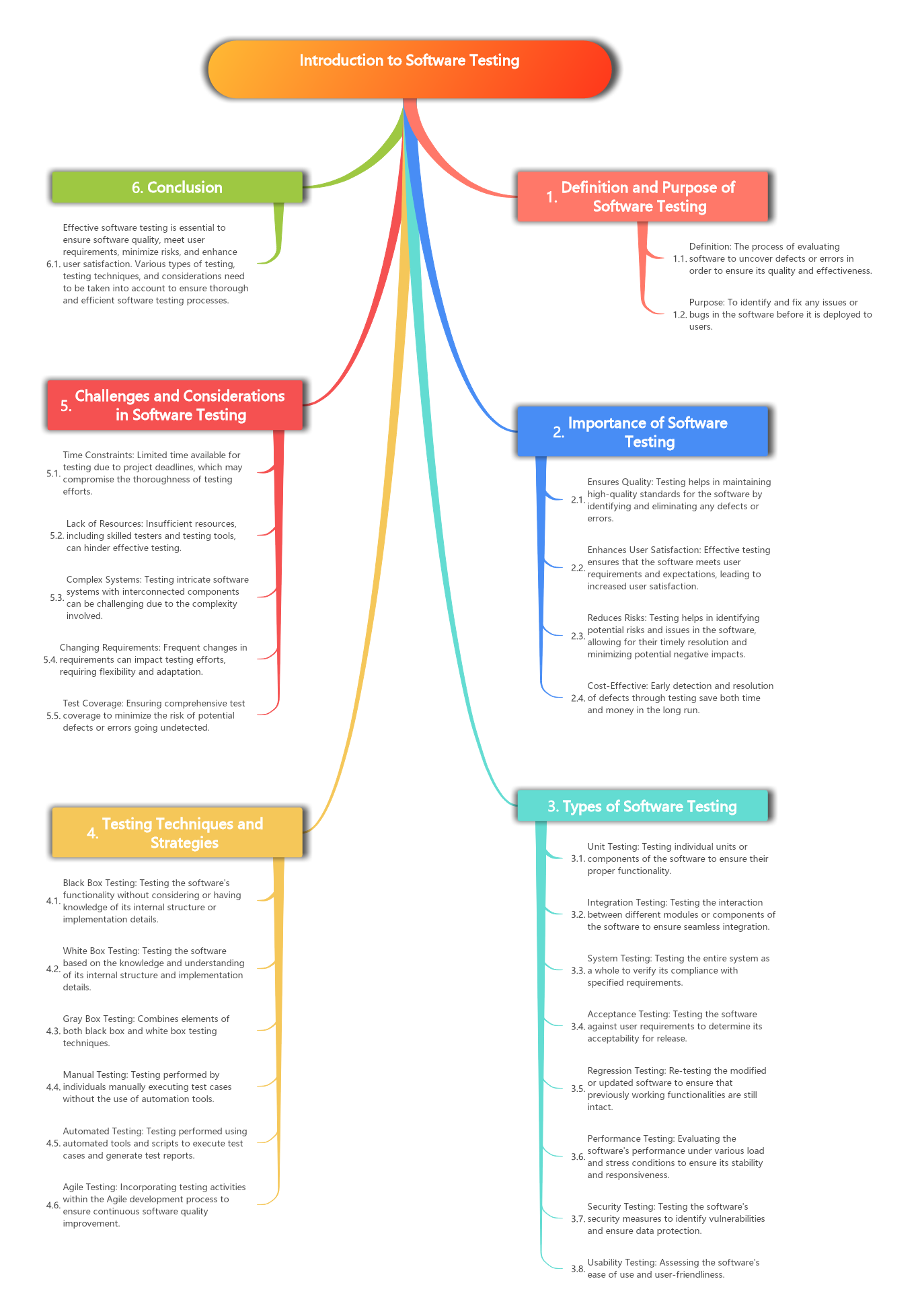
Definition: The process of evaluating software to uncover defects or errors in order to ensure its quality and effectiveness.
Purpose: To identify and fix any issues or bugs in the software before it is deployed to users.
Importance of Software Testing:
Ensures Quality: Testing helps in maintaining high-quality standards for the software by identifying and eliminating any defects or errors.
Enhances User Satisfaction: Effective testing ensures that the software meets user requirements and expectations, leading to increased user satisfaction.
Reduces Risks:Testing helps in identifying potential risks and issues in the software, allowing for their timely resolution and minimizing potential negative impacts.
Cost-Effective:Early detection and resolution of defects through testing save both time and money in the long run.
Types of Software Testing:
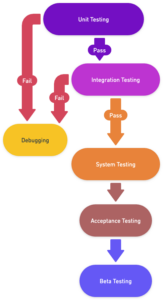
Unit Testing: Testing individual units or components of the software to ensure their proper functionality.
Integration Testing: Testing the interaction between different modules or components of the software to ensure seamless integration.
System Testing:Testing the entire system as a whole to verify its compliance with specified requirements.
Acceptance Testing:Testing the software against user requirements to determine its acceptability for release.
Regression Testing:Re-testing the modified or updated software to ensure that previously working functionalities are still intact.
Performance Testing:Evaluating the software’s performance under various load and stress conditions to ensure its stability and responsiveness.
Security Testing:Testing the software’s security measures to identify vulnerabilities and ensure data protection.
Usability Testing: Assessing the software’s ease of use and user-friendliness.
Testing Techniques and Strategies:
Black Box Testing: Testing the software’s functionality without considering or having knowledge of its internal structure or implementation details.
White Box Testing: Testing the software based on the knowledge and understanding of its internal structure and implementation details.
Gray Box Testing: Combines elements of both black box and white box testing techniques.
Manual Testing: Testing performed by individuals manually executing test cases without the use of automation tools.
Automated Testing: Testing performed using automated tools and scripts to execute test cases and generate test reports.
Agile Testing: Incorporating testing activities within the Agile development process to ensure continuous software quality improvement.
Challenges and Considerations in Software Testing:
Time Constraints: Limited time available for testing due to project deadlines, which may compromise the thoroughness of testing efforts.
Lack of Resources: Insufficient resources, including skilled testers and testing tools, can hinder effective testing.
Complex Systems: Testing intricate software systems with interconnected components can be challenging due to the complexity involved.
Changing Requirements: Frequent changes in requirements can impact testing efforts, requiring flexibility and adaptation.
Test Coverage: Ensuring comprehensive test coverage to minimize the risk of potential defects or errors going undetected.